
Sportrock Climbing Guides: 5 Mistakes to Avoid When Gearing Up for Your First Alpine Climbing Trip
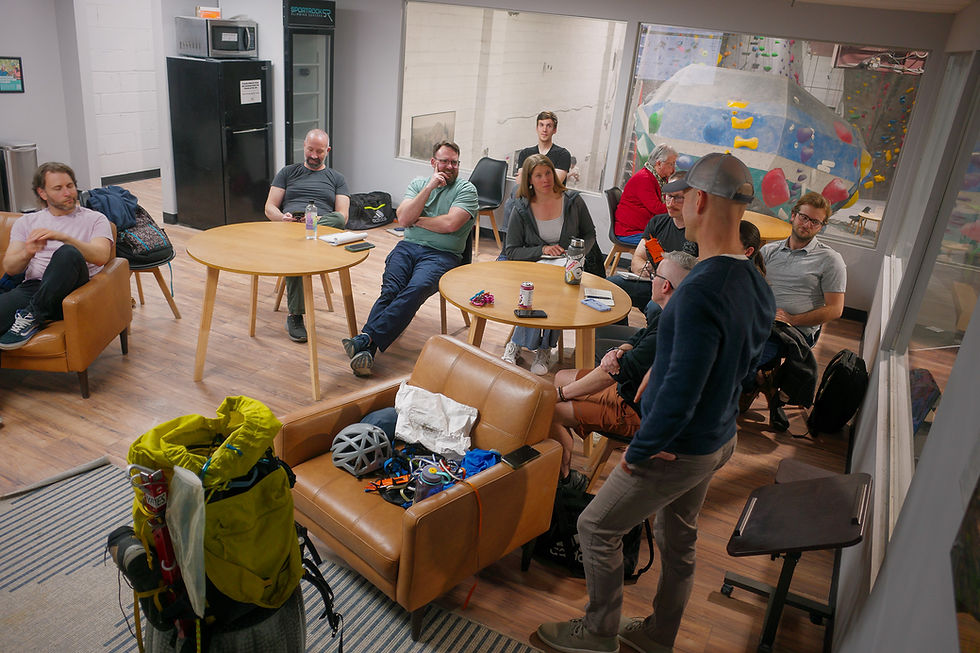
Sportrock CEO and veteran Mount Baker climber Michael Nanney discusses gear needs and how to make the right choices with Sportrock Climbing Guides' 2026 PNW Alpine team.
This summer, Sportrock Climbing Guides will lead its second annual expedition up Mount Baker in Washington State. It’s a prospect that requires a whole lot of gear, a whole lot of research, and, most of all, a whole lot of confident decisionmaking. Here are some things to keep in mind throughout the (sometimes nerve-wracking) process of choosing the right mountaineering gear.
There are certain moments in life that just stick with us.
I’ll never forget the births of my sons. I’ll never forget the day my husband proposed to me. And I will never forget how I felt around this time last year, when UPS dropped a long, rectangular cardboard box on my front porch, addressed to me from Petzl. Finally, after decades of dreaming, I had acquired my very own ice axe and crampons. This was it. I (along with the 13 other aspiring mountaineers) was part of Sportrock Climbing Guides’ first alpine expedition, an ascent of Mount Baker in Washington State.
There is no denying it, I thought I am officially a badass. I imagined TSA agents opening my luggage, discovering my mountain boots, harness and crampons and thinking, “Whoa. This chick is hardcore.”
Right now, a group of your fellow Sportrockers are gearing up for the exact same adventure that I was in 2025. (In addition to climbing Mount Baker, a few brave souls will follow up with ascents of Eldorado and Klwatti peaks shortly thereafter.)
Some will rent their mountaineering gear upon arriving in the Pacific Northwest. For them, the stakes are marginally lower: Sure, they need the right gear to ensure a safe, successful ascent. But they’ll be renting from outfitters with experienced local staff who can help them select gear based on their objectives. More importantly, if they wind up wishing they’d chosen a different pair of boots or a shorter length axe, they can simply return their rented gear and try something different next time.
But others will opt to purchase their equipment, which is a completely different ballgame. The gear list includes items that most East Coast climbers (especially gym climbers) have few opportunities to use, some costing several hundred dollars. No one wants to throw down $500-plus on a pair of mountain boots or $100 on an ax or $200 on crampons that not only come up short on the mountain but that then sit around their house indefinitely, reminding them of the summit they didn’t reach.
And that’s just the technical climbing gear. Trips like these tend to involve strenuous backpacking and camping in cold climates—endeavors that also require specialized equipment. And, of course, come July, they’ll have the added fun of figuring out how to pack all of that gear into their suitcases without exceeding their airline’s maximum luggage weight (a challenge only marginally easier than the climb they’ll use it for).
Without a doubt, acquiring gear is one of the most intimidating elements of a trip like this—especially for a first-time alpinist. For me, anxiety around gear acquisition was easily among the most significant barriers I had to overcome. How do you know what to buy? When the time comes, is the gear you’re buying really the right choice to get you to and from the summit?

Summit Dreams: Meet Sportrock's 2026 PNW Alpine Team.
Fortunately for me—and anyone else who signs on for these trips—the experts at Sportrock Climbing Guides (SRCG) have all of the answers when it comes to purchasing the right mountain gear, backed by years of experience outdoors.
This is the second year that SRCG has offered the trip, which has sold out both years. Both times, SRCG director Sean Taft-Morales and Sportrock CEO Michael Nanney (who has multiple Mount Baker ascents under his belt) have worked together to educate participants about the required gear, including its purpose, the best options for their needs, and what they can expect to spend.
When it comes to alpine expeditions like this one, gear needs can essentially be divided into three categories: climbing equipment, camping and backpacking necessities, and clothing and personal needs. For now, we’re going to focus on the gear you’ll need to safely reach the summit and back (but keep an eye out for a future blog post about selecting the right camping and backpacking gear).
So, let’s get started: Whether you’re signed up for this year’s expedition, planning to sign up next year, or just starting to be alpine-curious, here are some important considerations to keep in mind when choosing your gear.
One: Not all mountaineering boots and crampons are compatible. Pay attention, do your research, and when in doubt, ask someone who knows.
Navigating snow and glacier travel takes patience—not to mention very expensive boots and a lot of sharp metal. The boots you buy will determine what kind of crampons you need (and vice versa), and there are multiple types of both. It’s important to learn about the pros and cons of all the various options so that you can identify which features matter most to you and which ones you can do without.
Crampons, for example, can be made of steel or aluminum. Different types have different binding systems (i.e., how you put them on) and also different purposes. Some work best for straightforward winter hiking excursions, while glacier travel or ice climbing might require something more aggressive, with more spikes and higher rigidity. Whether you buy your boots first or your crampons, pay attention to the compatibility requirements so that you don’t show up at base camp with spikes you can’t use.
Two: Your mountain guide service requires you to bring specific types of carabiners. Don’t just grab whatever you have handy: Make sure what you bring meets their specifications.
Autolockers, nonlockers and wiregates. Pear-shaped, oval, or D-shaped. If your gear list mandates a specific number of locking carabiners, it’s because that is the type and number they know you’ll need in order to safely follow along on your rope team.
While there may occasionally be some wiggle room, you’re better off playing it safe and sticking to the specific directions given to you by your guide service. Not only could bringing the wrong type jeopardize your safety, it could keep you from joining your team at the summit. And no one wants to miss out on the achievement of a lifetime because they brought a wiregate ‘biner instead of a locker.
Three: Don’t let having the wrong harness complicate your ascent. Even if you’re tempted to save costs by using your rock harness, there’s good reason to consider buying an alpine climbing harness.
If you’re signed up for the trip through Sportrock, chances are you already have a climbing harness. But, while your existing harness might work for the purpose of your first mountaineering trip, there are reasons to consider buying an alpine harness instead.
Unlike the harness you wear at the gym, the belay loop on an alpine harness slides from side to side, making for easier, smoother rope travel and maneuverability. That might sound like more of a luxury than a necessity, but remember: There will be multiple other people attached to the same rope as you. That means your inefficiencies and delays are theirs as well.
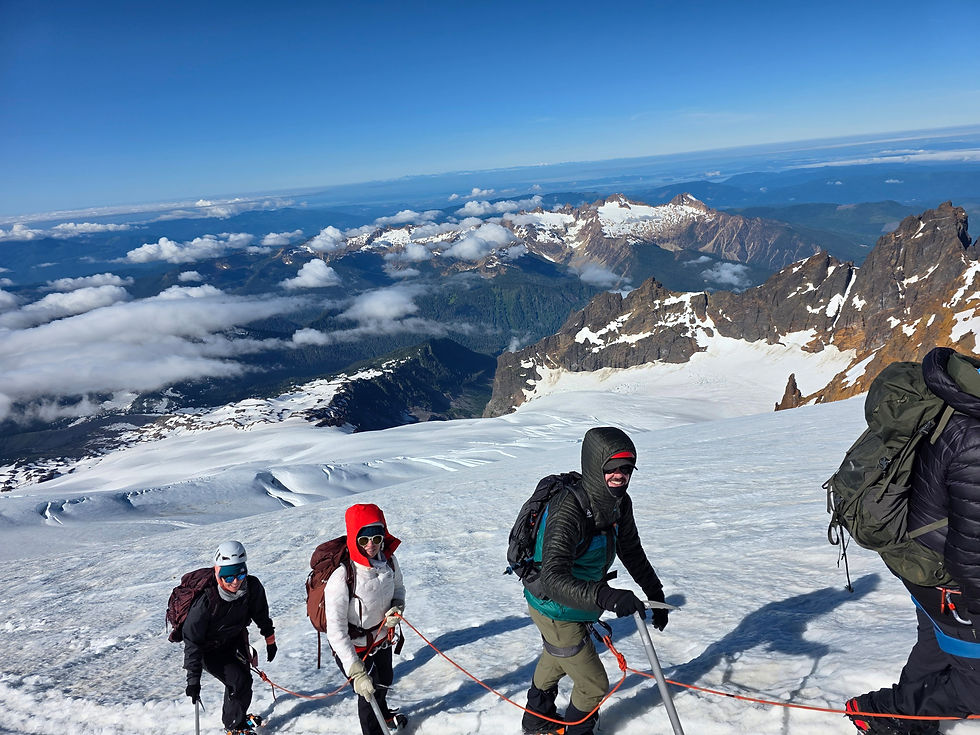
Between a Rock and a High Place: How Joining Sportrock Climbing Guides’ 2025 Mt. Baker Expedition Changed My Life.
Four: On that same note, you might be asking yourself: “Will my rock climbing helmet work for mountaineering?” Probably. But there are good reasons to consider getting an alpine helmet instead.
You may also already have a climbing helmet, especially if you’ve done some outdoor climbing already.
Rock climbing helmets are largely constructed for warmer conditions but with a focus on durability and impact protection, which typically means heavier materials but also improved ventilation.
Alpine helmets, on the other hand, tend to be lighter. They’re also more likely to have headlamp clips (a necessity when you’re getting an alpine start on summit day), and they’re designed to protect against a different type of impact than the overhead falling rock you might be used to worrying about at your local crag.
Five: Next to your crampons, your ax is one of the most important tools you’ll have to get yourself up and down the hill. Make sure you select the right length.
There’s a big difference between glacier axes and ice climbing axes. Glacier axes have a long, straight handle (or shaft) with a sharp spike at the end. That spike is critical. It allows you to use the axe for stability, similarly to a trekking pole, but with an important difference: While the length of your trekking pole is determined by your individual height, the height of your axe is more aligned with the steepness of the slope you’re tackling.
In other words, don’t assume that because you’re tall, you want the longest possible axe. Yes, height can have an impact on the length you need, but the objective at hand, particularly the terrain, is just as important. The steeper the terrain, the more unwieldy an axe will become if the handle is too long.
These are just a few considerations out of dozens to keep in mind when shopping around for your technical alpine gear. And, of course, there are still clothing and camping needs to keep in mind (which we’ll touch on in another blog post coming up soon). But getting the right hardware is a fantastic—and highly motivating—step in your training and preparation process. After all, whenever you feel your motivation lagging on the stair climber, you can look up the photos and receipts of your shiny new mountaineering gear: There’s no way you’ll want to let that go to waste.
Thinking about pursuing your own alpine adventures? Learn more about the options offered by Sportrock Climbing Guides, drop us a line or visit online to check out and sign up for upcoming classes and trips.


